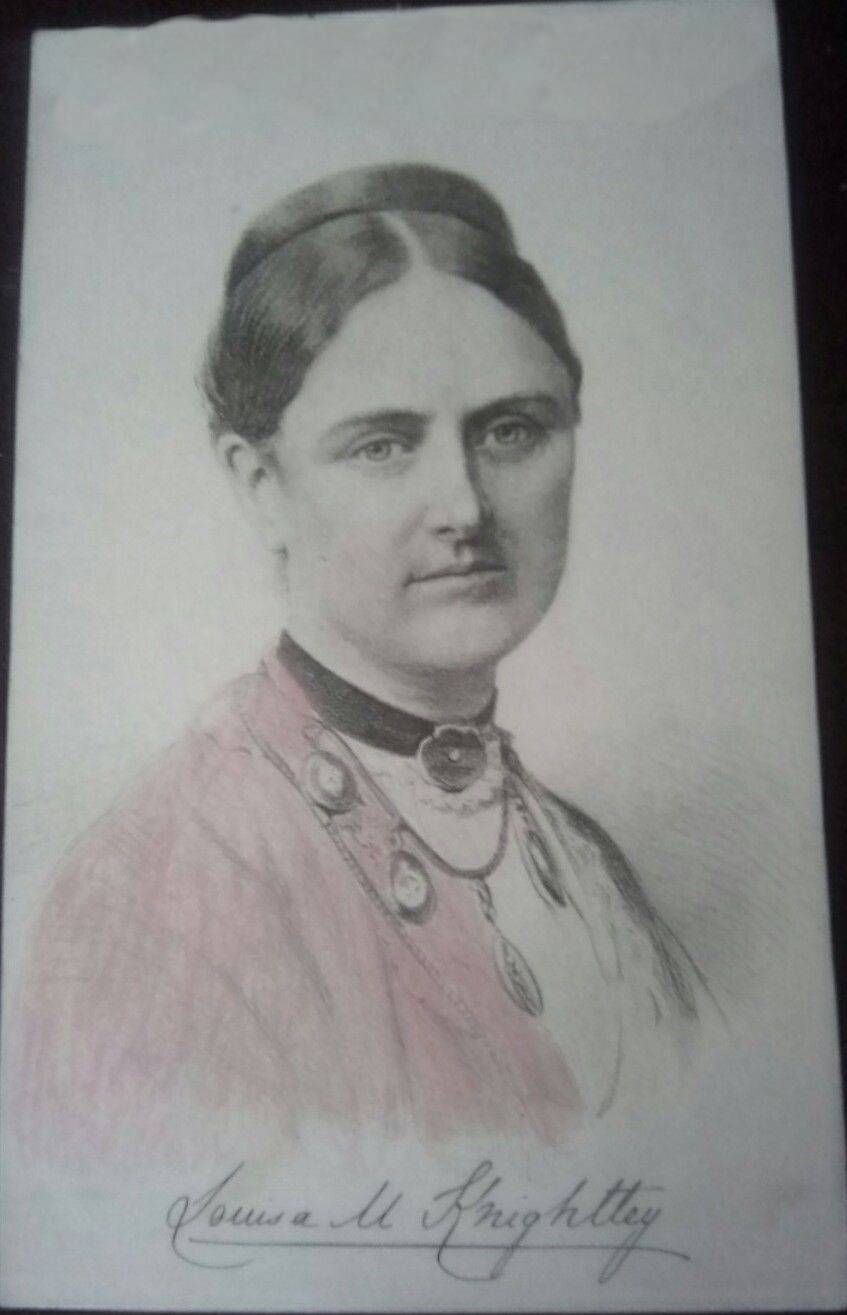
 Louisa Mary Knightley, Lady Knightley of Fawsley (April 25, 1842 – October 2, 1913), was a prominent British activist, philanthropist, and political figure.
Queer Places:
Fawsley Estate, Fawsley, Daventry NN11 3BA, United Kingdom
St Mary's Churchyard, Daventry NN11 3BA, United Kingdom
Louisa Mary Knightley, Lady Knightley of Fawsley (April 25, 1842 – October 2, 1913), was a prominent British activist, philanthropist, and political figure.
Born into an aristocratic family, the daughter of Gen Edward Bowater and Lady Emelia Mary Barne Bowater, she became a significant voice for conservative women’s rights, particularly in the late 19th and early 20th centuries.
Born Louisa Mary Bowater in London on April 25, 1842, she was the daughter of General Edward Bowater. She was raised in high-society circles and maintained a close connection to the British royal family.
In 1869, she married Sir Rainald Knightley, a Conservative Member of Parliament who was 23 years her senior. Louisa became deeply involved in Conservative politics, playing a key role in the Primrose League (a pro-Conservative organization). Her experience in mobilizing voters while being unable to vote herself turned her into a firm advocate for women’s suffrage, though she famously opposed the "militant" tactics of groups like the suffragettes.
Lady Knightley was a tireless organizer of social services. She was a founding member of the Girls’ Friendly Society and the Working Ladies’ Guild. Later in life, she served as president of the South African Colonisation Society and was the founding president of the Conservative and Unionist Women’s Franchise Association (1908–1910).
Her life is well-documented through her journals, which provide an invaluable, detailed look at the social, political, and cultural life of the Victorian and Edwardian eras. The editor of Lady Louise Knightley’s journals identified the central figure of the early volumes as Louise’s cousin and “inseparable companion” Edith Barne, with whom Louise exchanged daily letters when they were separated between 1856 and 1864. Writing in 1865 of the friend who came “to bless my life,” twenty-three-year-old Louisa Knightley fantasized about her eventual wedding with a sense of pleasure rather than incipient loss: “I have grown to love Edie very dearly— the Sleeping Beauty, whom life and the world are slowly awakening. May the enchanted Prince soon come and touch the chord that will rouse her from the dreams of childhood and make of her the perfect woman!”
In the Victorian era, intense, passionate, and deeply emotional relationships between women were common and socially accepted. These bonds were often characterized by daily letter-writing, expressions of romantic love, and the use of pet names. They were generally viewed as a virtuous, non-sexual "nurturing" phase before a woman transitioned into the "perfect woman" via marriage.
When Louisa writes about her cousin Edith—calling her an "inseparable companion" and using the "Sleeping Beauty" metaphor—she is expressing the intense emotional intimacy that was the hallmark of female companionship in the mid-1800s.
Modern historians often analyze these relationships through an LGBTQ+ lens. While it is impossible to definitively label these women as "lesbian" or "bisexual" by modern standards—as the concepts of sexual identity did not exist in the same way then—many scholars argue that such bonds were the primary way women of that era navigated romantic desire. These relationships provided women with the emotional intimacy and partnership that was often absent in patriarchal, arranged, or duty-bound marriages.
Lady Knightley’s journals serve as a primary source for how these intense, devoted friendships occupied a central space in the lives of Victorian women, operating alongside and often preceding their formal lives as wives and mothers.
The Fawsley Estate had been in the Knightley family since the early 16th century. Following her marriage to Sir Rainald, Louisa became the mistress of the house. In preparation for their wedding, the architect Anthony Salvin was commissioned to extend the estate in 1867–1868. Louisa was the last member of the Knightley family to live in Fawsley Hall. She resided there until her death in 1913 and is buried in the near St Mary's Churchyard. After she passed away, the house remained unoccupied, and its contents were auctioned over a three-week period in 1914. The estate was eventually inherited by her husband's nephew, the sixth Viscount Gage, in the 1930s. During her time at Fawsley, Louisa was known for her philanthropic activities. Notably, she befriended Joseph (often referred to as John) Merrick, known as "The Elephant Man," and provided him with a cottage on the estate for his only three holidays. Her journals, which are often found in the guest rooms of the modern-day hotel that occupies the hall, provide a detailed record of her life and the social history of the estate during the Victorian and Edwardian periods.
References:
 Between Women: Friendship, Desire, and Marriage in Victorian England by Sharon Marcus |
Other references:
Support this project
This website is a passion project researched, developed, and funded entirely by me. If you find the content valuable and would like to help support the ongoing research and hosting costs, any contribution is deeply appreciated.
Thank you for keeping this independent resource alive!
My books on Amazon: Elisa Rolle's books